
A Guide to Open Conversations about Teen Relationships and Sexuality

Download as PDF
Download a printable version of this resource.
Based on insights from pediatric and behavioral health experts
Listen more than you talk.
- Listening helps teens feel safe opening up to you. The more they talk, the more you can guide them. Try not to interrupt or jump to conclusions.
Ask what they already know or have heard.
- This helps you correct misinformation, understand their perspective, and avoid giving too much or too little detail.
Be calm, factual, and non-judgmental.
- Teens shut down when they feel judged or lectured.
- Stick to clear, accurate information.
- Your tone matters as much as your words.
Encourage questions – anytime.
- Let them know:
- No topic is off-limits
- They will not be in trouble for asking
- Pay attention to their reactions and body language.
- Remind your child that the conversation can remain open; it does not need to end on the day (or night) it began. You can revisit the conversation over time, as long as your child wants to ask questions and keep learning about the topics.
Don’t assume your child already knows everything
- Even if teens seem mature or confident, they may not have important facts.
Don’t assume a question means they are “doing it”
- Curiosity does not equal behavior. Teens often ask questions because they hear about things at school, online, or from friends.
Don’t assume they fully understand what you said
- Teens and adults often mean different things, when they use the same words.
- Ask them to repeat back what they heard in their own words. If something feels unclear, pause and clarify.
Remember, no book, peers, or website can replace your values and guidance. You don’t have to do this perfectly, you just have to keep showing up.
-
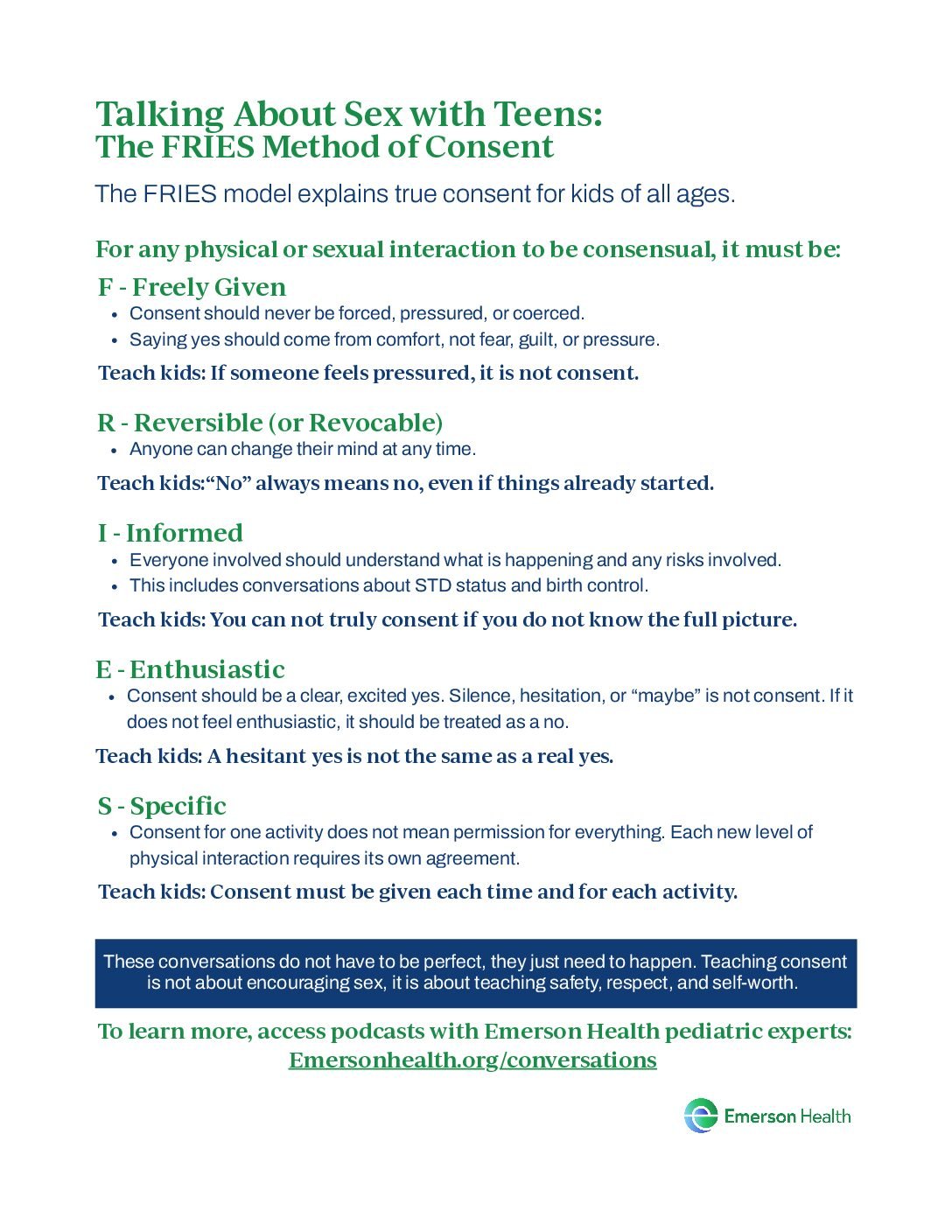
The FRIES model explains true consent for kids of all ages
For any physical or sexual interaction to be consensual, it must be: F – Freely Given Teach kids: If someone feels pressured, it is not consent. R -Reversible (or…
-
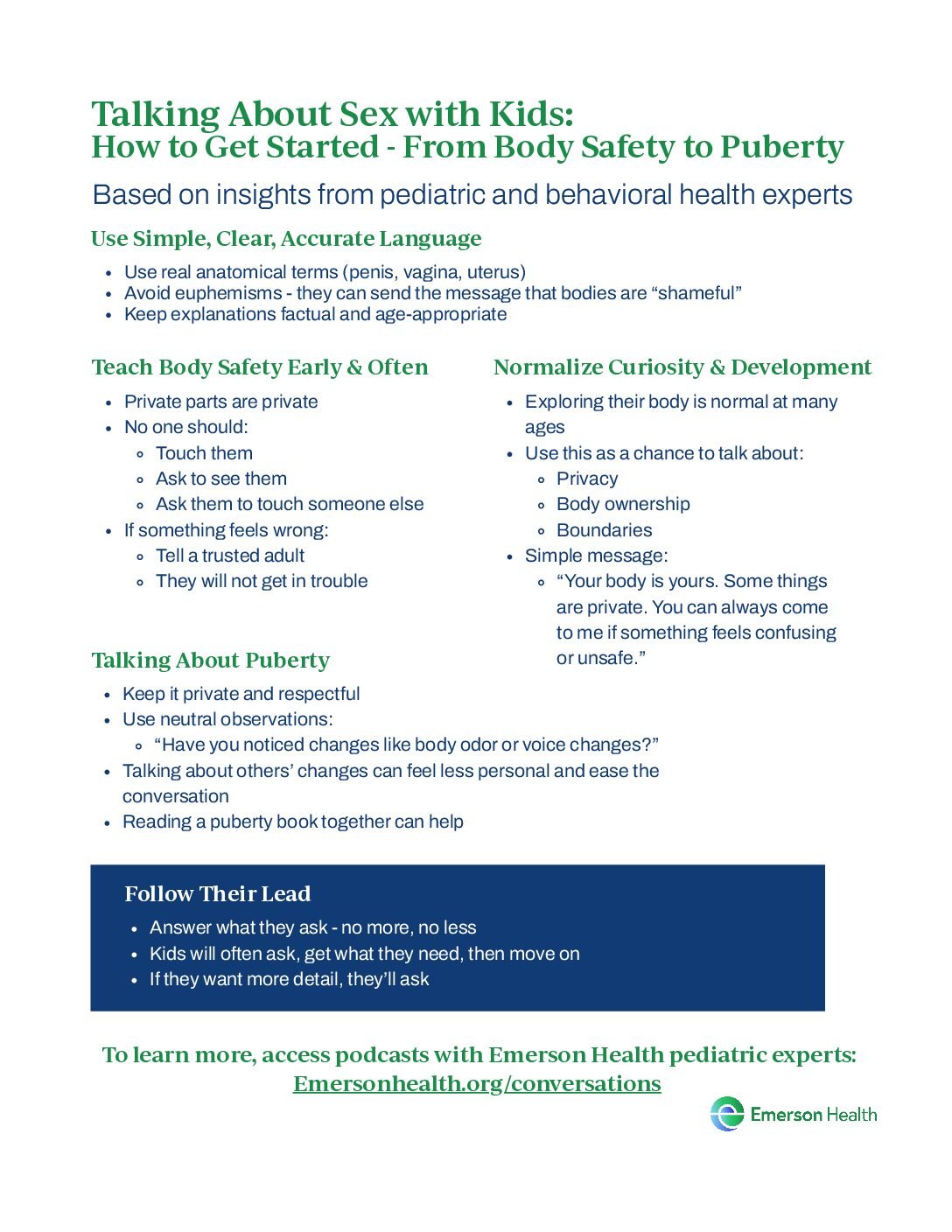
Talking About Sex with Kids: How to Get Started – From Body Safety to Puberty
Based on insights from pediatric and behavioral health expertsUse Simple, Clear, Accurate Language Teach Body Safety Early & Often Normalize Curiosity & Development Follow Their LeadTalking About Puberty
-
A Guide to Talking About Difficult Topics with Your Children
Podcasts from Emerson’s pediatric and behavioral health experts