
Talking About Sex with Kids: How to Get Started – From Body Safety to Puberty

Download as PDF
Download a printable version of this resource.
Based on insights from pediatric and behavioral health experts
Use Simple, Clear, Accurate Language
- Use real anatomical terms (penis, vagina, uterus)
- Avoid euphemisms – they can send the message that bodies are “shameful”
- Keep explanations factual and age-appropriate
Teach Body Safety Early & Often
- Private parts are private
- No one should:
- Touch them
- Ask to see them
- Ask them to touch someone else
- If something feels wrong:
- Tell a trusted adult
- They will not get in trouble
Normalize Curiosity & Development
- Exploring their body is normal at many ages
- Use this as a chance to talk about:
- Privacy
- Body ownership
- Boundaries
- Simple message:
- “Your body is yours. Some things are private. You can always come to me if something feels confusing or unsafe.”
Follow Their Lead
- Answer what they ask -no more, no less
- Kids will often ask, get what they need, then move on
- If they want more detail, they’ll ask
Talking About Puberty
- Keep it private and respectful
- Use neutral observations:
- “Have you noticed changes like body odor or voice changes?”
- Talking about others’ changes can feel less personal and ease the conversation
- Reading a puberty book together can help
-
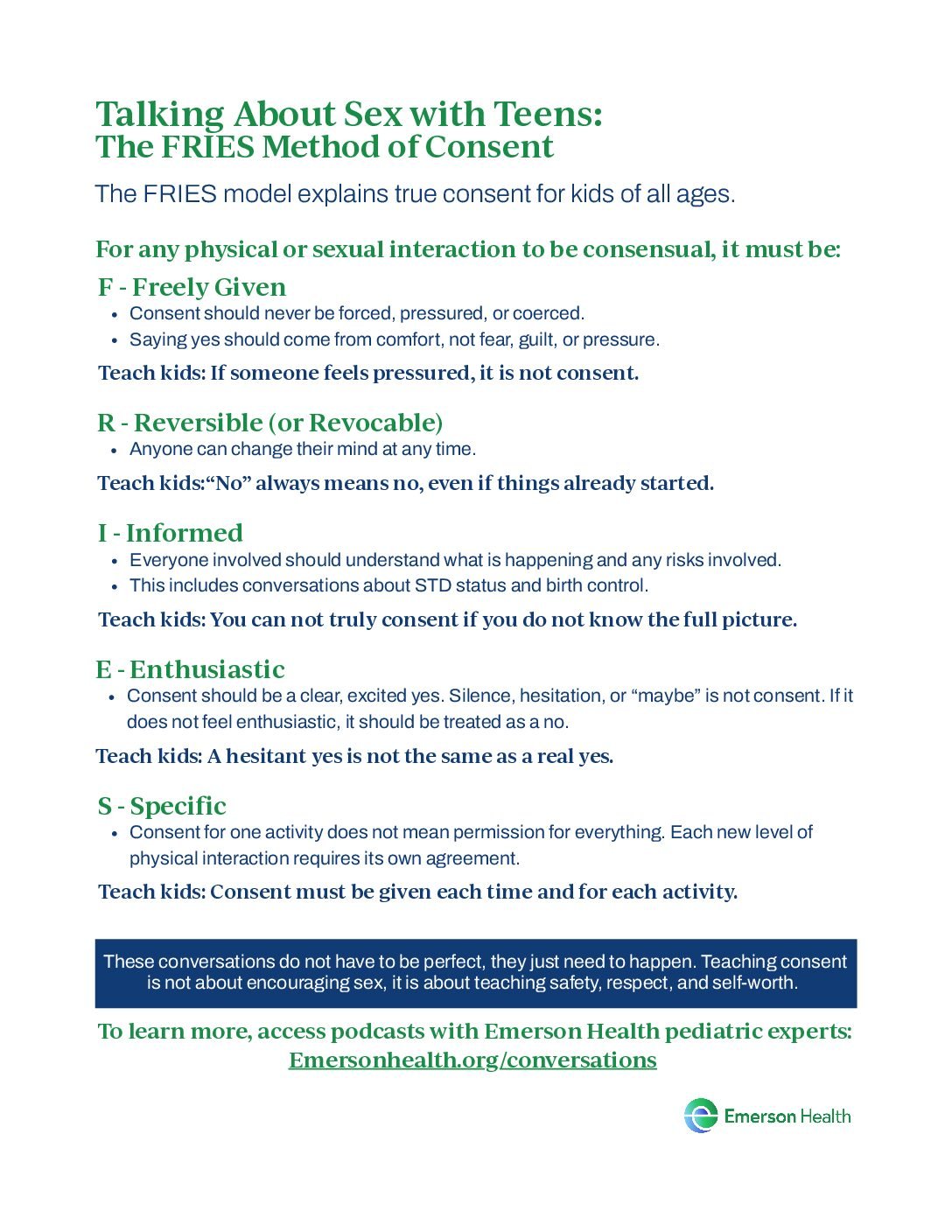
The FRIES model explains true consent for kids of all ages
For any physical or sexual interaction to be consensual, it must be: F – Freely Given Teach kids: If someone feels pressured, it is not consent. R -Reversible (or…
-
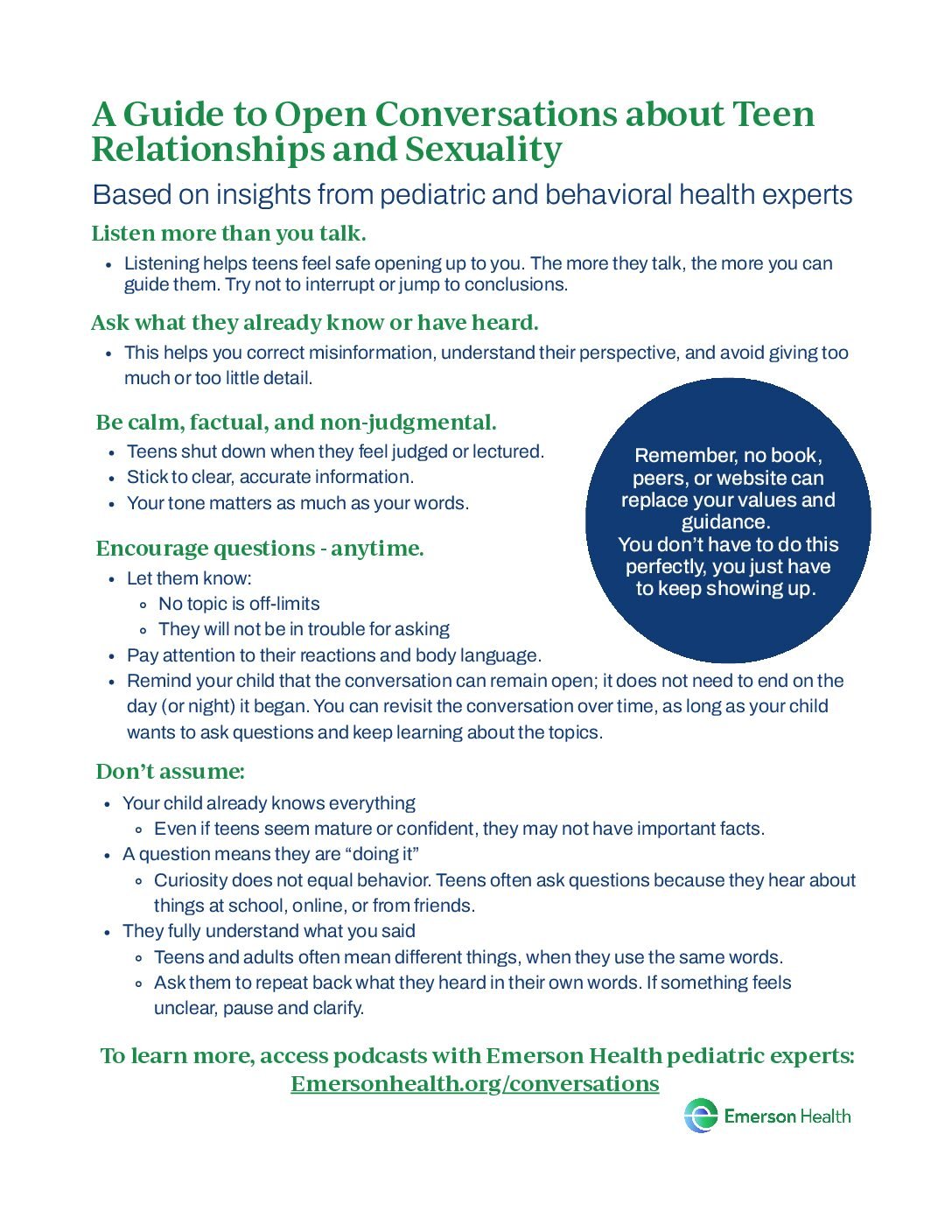
A Guide to Open Conversations about Teen Relationships and Sexuality
Based on insights from pediatric and behavioral health expertsListen more than you talk. Ask what they already know or have heard. Be calm, factual, and non-judgmental. Encourage…
-
A Guide to Talking About Difficult Topics with Your Children
Podcasts from Emerson’s pediatric and behavioral health experts