
Behavioral Health Resources: Free Substance Use Support Opportunities
Free Substance Use Support Opportunities
This page highlights free substance use support resources for individuals and families. The options below include crisis and urgent care access, peer-led recovery groups, family support programs, and community-based services. These resources aim to reduce barriers to care and support recovery, safety, and long-term wellness.
Crisis Care and Access to Treatment
Massachusetts Substance Use Helpline: helplinema.org
Statewide public resource for finding substance use treatment and recovery services, 800-327-5050
MA Behavioral Health Helpline: masshelpline.com or 833-773-2445
Call or text 24/7 for urgent care evaluation, connection to clinical services, and mobile crisis response. Those concerned about someone who may need support are welcome to call.
Community Behavioral Health Centers (CBHCs):
mass.gov/community-behavioral-health-centers or 833-773-2445
24/7 walk-in alternative to emergency department visits for mental health and substance use crisis and urgent care. CBHCs in Waltham, Framingham, Lowell, and Leominster cover the Emerson Hospital service area. Check the link for location info.
Support Groups
Alcoholics Anonymous: aaboston.org/meetings
A fellowship of men and women who have had a drinking problem, 617-426-9444
Smart Recovery: smartne.org
Self-Management and Recovery Training (SMART) help resolving problems with any addiction
New England Region of Narcotics Anonymous: nerna.org
Recovering addicts who meet regularly to help each other stay clean
Marijuana Anonymous of New England: newenglandma.org
Helping one another recover from marijuana addiction
Support Groups for Families Affected by Substance Use
Learn to Cope: learn2cope.org
Support network for family members coping with a loved one addicted to opiates or other drugs
Al-Anon and Alateen: al-anon.org
For families and friends of alcoholics
Nar-Anon Family Groups: nar-anon.org
12-Step program for family and friends of addicts
Community Support
Many towns now have behavioral health clinicians working alongside local police departments. They work to address the mental health and substance use needs of people coming into contact with law enforcement through crisis intervention and referrals to services. They also offer NARCAN training and distribution. Contact your local police department about their behavioral health clinician.
Mental Health Content
-
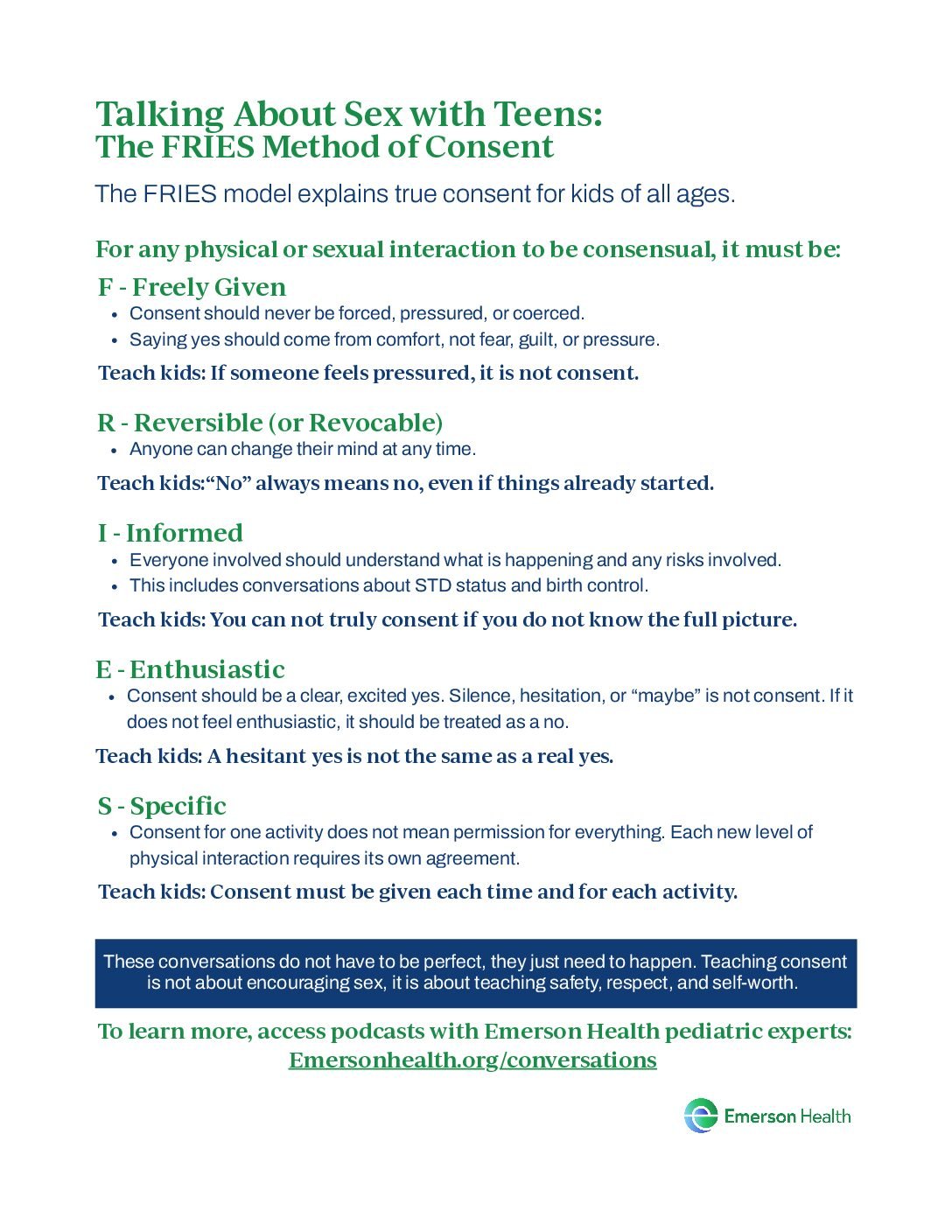
The FRIES model explains true consent for kids of all ages
For any physical or sexual interaction to be consensual, it must be: F – Freely Given Teach kids: If someone feels pressured, it is not consent. R -Reversible (or…
-
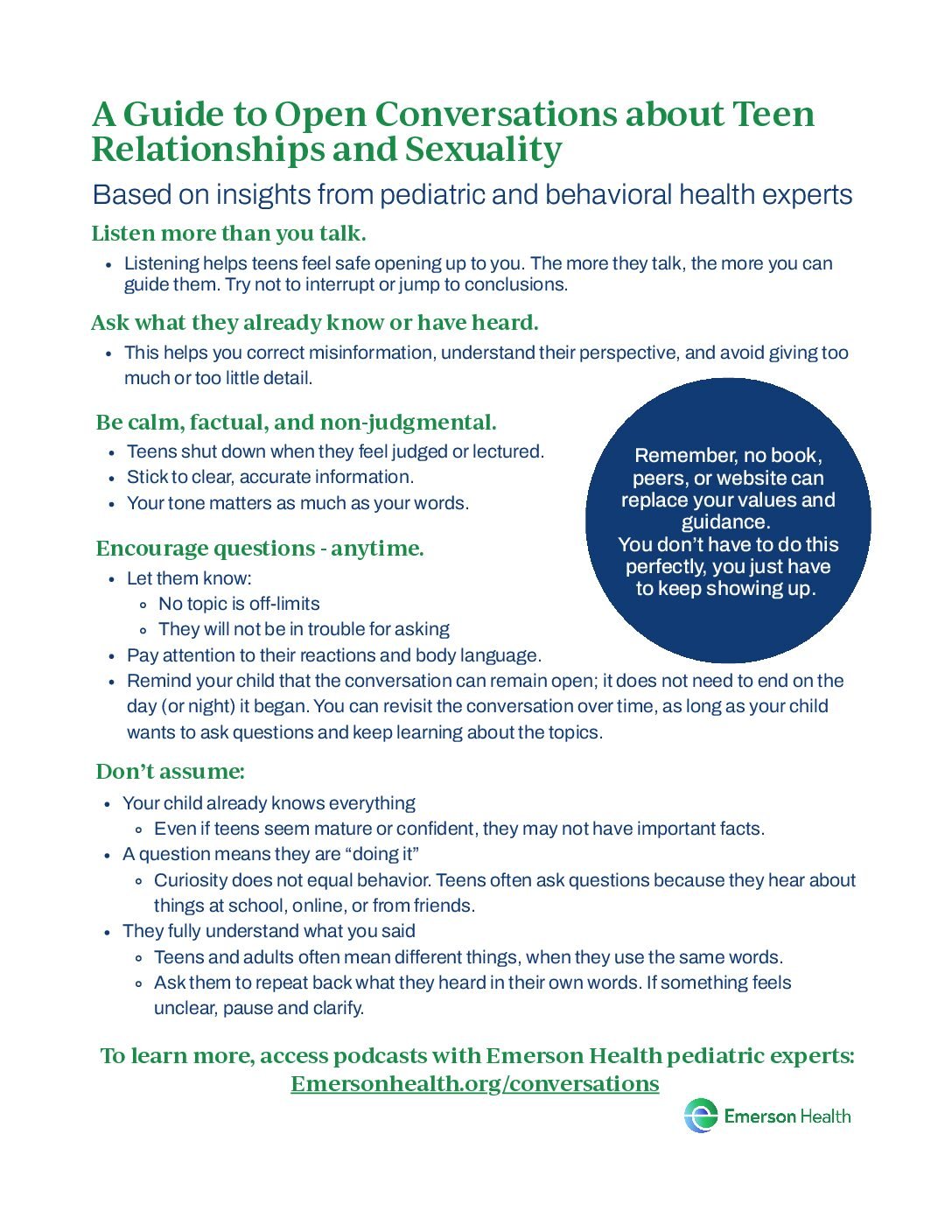
A Guide to Open Conversations about Teen Relationships and Sexuality
Based on insights from pediatric and behavioral health expertsListen more than you talk. Ask what they already know or have heard. Be calm, factual, and non-judgmental. Encourage…
-
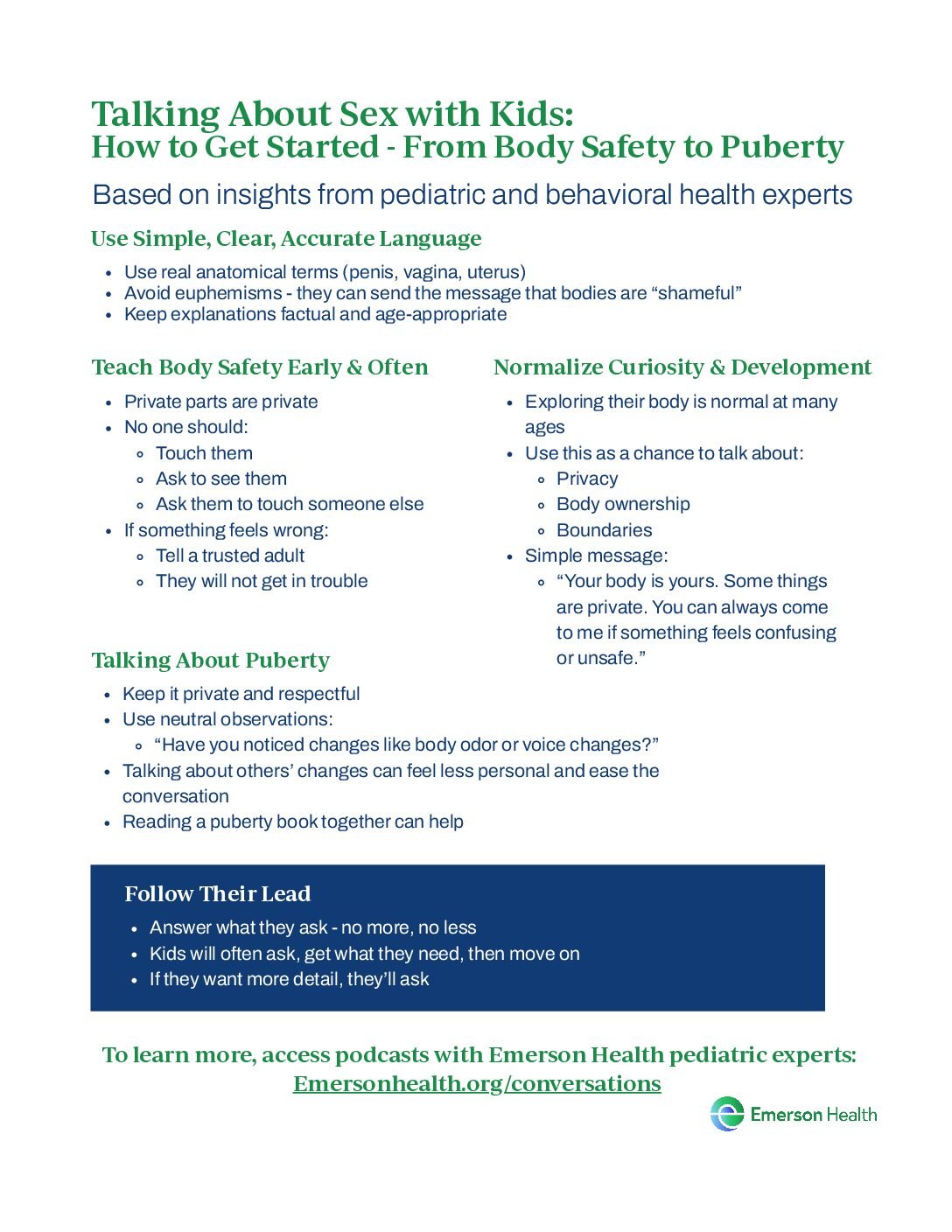
Talking About Sex with Kids: How to Get Started – From Body Safety to Puberty
Based on insights from pediatric and behavioral health expertsUse Simple, Clear, Accurate Language Teach Body Safety Early & Often Normalize Curiosity & Development Follow Their LeadTalking About Puberty