A Young Mother's Breast Cancer Journey: Finding Hope Through Compassionate Care

Breast Cancer Can Happen at Any Age
Breast cancer is less common in younger women, but it can happen. While many breast changes are not cancer, it is important to pay attention to your body and seek medical evaluation if something does not feel right.
When 27-year-old Peace Owino noticed pain in her breast while weaning her young son from breastfeeding, she trusted her instincts and sought answers. Her experience is a reminder that early evaluation, expert care, and a compassionate healthcare team can make all the difference.
“I Thought I Was Too Young”
When Peace Owino first noticed pain in her breast, cancer was the furthest thing from her mind.
At just 27 years old, she was in the middle of weaning her young son, Ismael, from breastfeeding. With no family history of breast cancer and her young age, cancer did not seem possible.
However, something did not feel right to her.
A Life-Changing Diagnosis
Peace, who lives in Leominster, began seeking answers through her primary care provider.
Her phone rang on a Friday afternoon after she had an ultrasound and MRI. It was her primary care provider calling to tell her she had an aggressive form of breast cancer.
“When you hear the words ‘breast cancer,’ you think you are going to die.”
Fear quickly took over. Peace did not sleep that weekend and spent hours online reading worst-case scenarios.
A Turning Point
The anxiety became overwhelming.
On Sunday evening, just two days later, amid a panic attack, Peace’s husband drove her to Emerson’s Emergency Department.
What happened next became a turning point.
“I was met with so much compassion,” Peace said. “Nurses validated my fear. My ED doctor, Sam Sockwell, was calm, kind, and honest.”
They discussed her test results in detail, and Dr. Sockwell explained that the cancer was treatable. He reassured her that Emerson has an experienced breast care team, including oncologists from Mass General Brigham Cancer Institute who care for patients at Emerson.
“That was the beginning of my cancer journey at Emerson,” she said. “They literally told me, ‘We have got you.’ That was what I needed to hear. I trusted them with my life.”
A Team That Moved Quickly
By 8 a.m. the next morning, Peace heard from Emerson’s breast cancer nurse navigator. Her appointments and treatment plan were already underway.
Along with breast surgeon Liza Ragulin Coyne, MD; Mass General Brigham Cancer Institute medical oncologist Uma Narayanasami, MD, her care team also included clinicians in plastic surgery, infusion, social work and physical therapy. Peace says the primarily female care team made a meaningful difference.
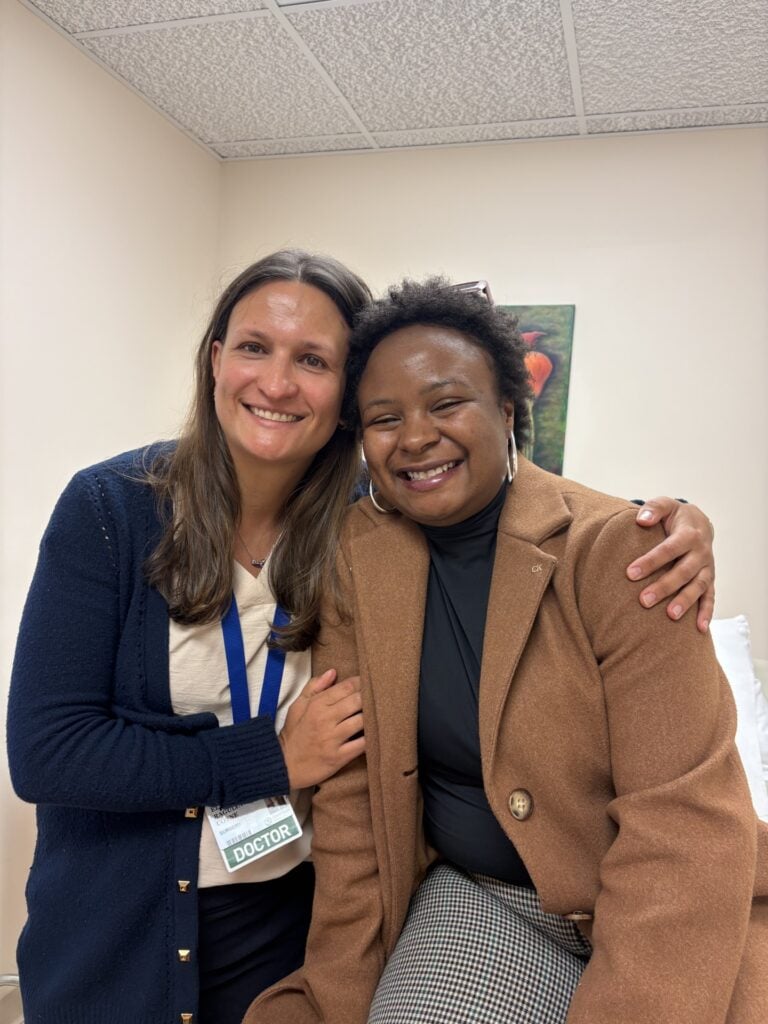
“They understood my perspective as a young mom,” she said. “They explained everything. Dr. Ragulin Coyne drew pictures of my breast and spent hours with me making sure I understood my disease and treatment plan. They all spent sincere, uninterrupted time with me.”
Peace underwent a mastectomy less than one month after her diagnosis. The surgery was carefully planned, and the incision was made with both healing and long-term appearance in mind.
“She thought of everything,” Peace said. “She considered my age, my body, my future, and even that I like to wear strapless dresses. The way she planned my surgery, you can barely see any scars!”
Care That Went Beyond Medicine
After surgery, lab results showed that Peace needed chemotherapy and immunotherapy to ensure the cancer was fully removed from her body.
She completed 11 rounds of chemotherapy, 17 rounds of immunotherapy, and several months of physical therapy at Emerson’s Clough Family Center for Rehabilitative and Sports Therapies to regain her strength.
Social workers helped connect her with financial assistance, gas and food gift cards, and community resources. Nurses knew her well and enjoyed stories about her son. Front desk staff greeted her with warmth.
Emerson’s support extended beyond medical care.
Finding Strength—and Sharing Hope
Today, Peace is doing well. She graduated with her master’s in Clinical Mental Health Counseling and is currently working as a trauma therapist.
Peace shares her story openly to help people understand that young women can get breast cancer and that it is treatable, especially when found early.
“Take symptoms seriously,” she said. “Advocate for yourself. Find your experienced, compassionate care team. Because of my Emerson team, I am here to give hope to others.”
What Young Women Should Know About Breast Cancer
Peace’s story is an important reminder that while breast cancer is less common in younger women, it can happen.
Most breast changes are not cancer, but it is important to talk with your healthcare provider if you notice:
- A new breast lump
- Persistent breast pain that does not improve
- Changes in breast size or shape
- Skin dimpling
- Nipple discharge when not breastfeeding
- Changes in the nipple or breast skin
Trust your instincts. If something does not feel right or symptoms persist, it is worth getting checked.
Breast Pain Does Not Always Mean Cancer
Breast pain is common and is often related to hormonal changes, breastfeeding, injury, or other noncancerous conditions.
However, persistent breast pain or breast changes should always be evaluated by a healthcare provider to determine the cause and whether additional testing is needed.
Why Early Evaluation Matters
One of the biggest lessons from Peace’s story is the importance of listening to your body.
Seeking medical evaluation early can help identify problems sooner and provide more treatment options if treatment is needed.
Early evaluation also provides peace of mind when symptoms turn out to be caused by a noncancerous condition.
Why Choose Emerson Health
Every breast cancer journey is unique.
At Emerson Health, patients have access to a multidisciplinary breast care team that includes breast surgeons, medical oncologists, plastic surgeons, nurse navigators, rehabilitation specialists, social workers, and other experts who work together to coordinate care from diagnosis through recovery.
Patients also have access to personalized support services designed to care for the whole person—not just the disease. Learn more about Emerson’s Comprehensive Breast Health Program.
Take the Next Step
If you notice a new breast lump, persistent breast pain, or other concerning breast changes, do not ignore your symptoms.
Talk with your primary care provider or request an appointment with Emerson Health’s Comprehensive Breast Program.
When treatment is needed, early evaluation can make an important difference.
Frequently Asked Questions
Can women in their 20s get breast cancer?
Yes. Although breast cancer is less common in younger women, it can occur. Any persistent breast changes should be evaluated by a healthcare provider.
Can breast pain be a sign of breast cancer?
Breast pain is usually caused by noncancerous conditions. However, persistent pain or pain accompanied by other breast changes should be evaluated.
Should I see a doctor if I have breast pain while breastfeeding or weaning?
Many breast changes during breastfeeding and weaning are normal. However, persistent pain, a lump, or other concerning symptoms should be discussed with your healthcare provider.
What happens after a breast cancer diagnosis?
Treatment depends on the type and stage of cancer. It may include surgery, chemotherapy, immunotherapy, radiation therapy, hormone therapy, or a combination of treatments. Your care team will develop a personalized treatment plan.
Why is early diagnosis important?
Finding breast cancer early often provides more treatment options and may improve outcomes.